Remember the humanity behind digital accessibility
The story at a glance
- Changed the perspective — Working with a coworker who relied on his voice to navigate the web helped Jessie Nemec understand the real impact of digital accessibility.
- Worked through the complexity — UW–Madison Libraries is developing workflows to address accessibility across millions of digital collection items in different formats.
- Made it a shared effort — A supportive culture of learning and collaboration helps Library staff keep improving accessibility without fear of making mistakes.
Jessie Nemec was in the early stages of her career when she realized the importance of digital accessibility. At her first job out of college, one of her coworkers was paraplegic.
“It was such an eye-opening experience to work with somebody who had to rely on their voice to navigate the web,” Nemec said. “Seeing the struggles he had, hearing how websites were read to him – it changes your mindset when you see it.”
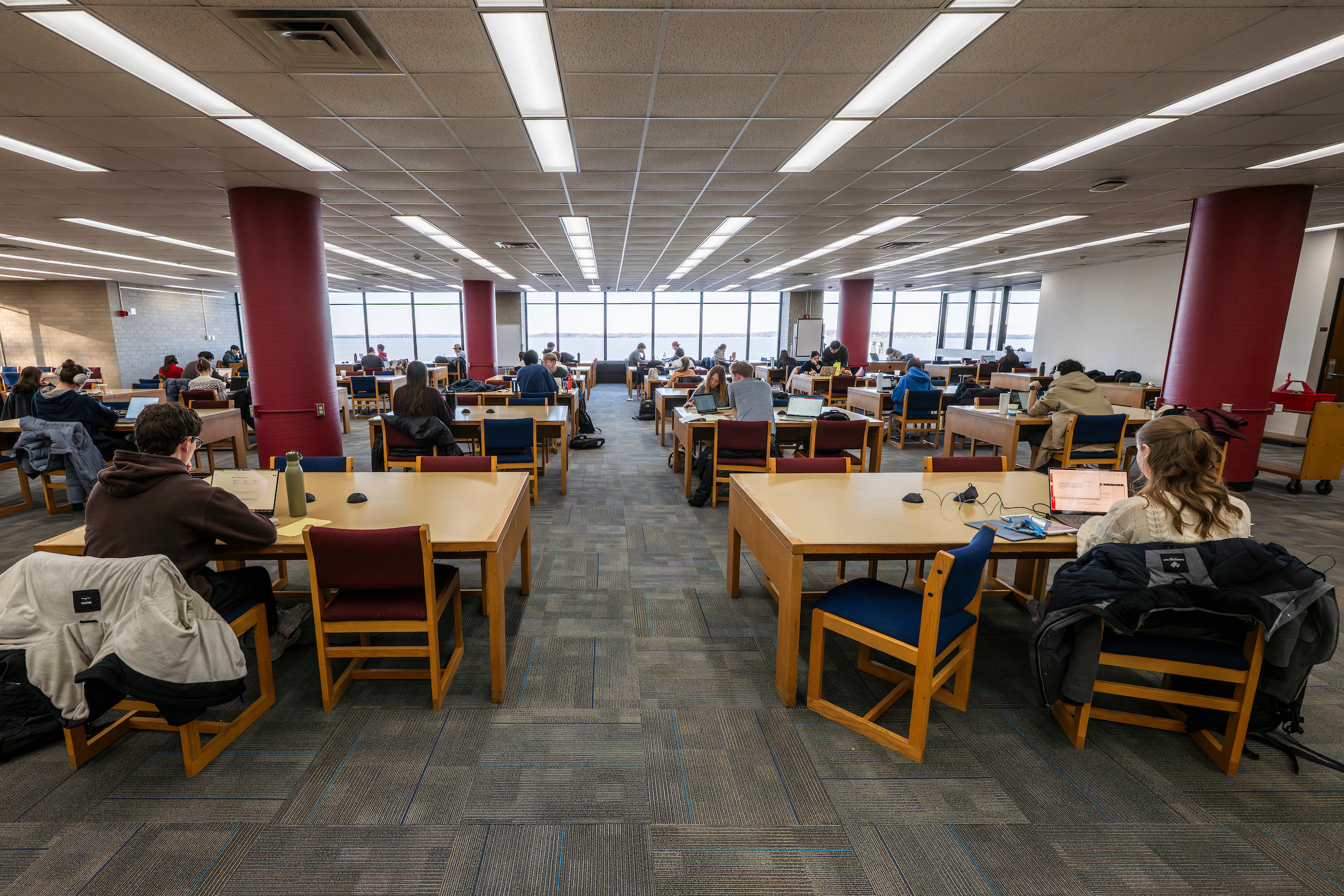
Nemec is now the web application designer and developer at UW–Madison Libraries, where systemwide, digital accessibility has become an increasingly important focus. The Library Accessibility Steering Committee is guided by a simple philosophy: “This is the right thing to do.” Not only for individuals with visual, auditory, motor or cognitive disabilities, but also those with autism, dyslexia, ADHD or whose first language isn’t English. It’s all about eliminating barriers, Nemec said.
As the Libraries staff has implemented digital accessibility updates, some unique challenges have emerged. Because items and collections span a wide range of formats, subjects and time periods, each presents its own digital accessibility considerations.
“There are so many interesting but very complex pieces that we have, and there are millions of them. How do you go through all of those and make them accessible?” Nemec said.
To put this challenge into perspective, consider these examples the Libraries team has encountered in their digital accessibility work:
- Fragments of pottery
- 19th-century Russian artwork
- Sheet music for a piano march composed in 1900
- 1883 atlas of the German Empire and neighboring regions
- Children’s book written in French
- Historical plant ecology research tree data
- Audio recordings of a Scotsman singing songs of his native region
The University of Wisconsin Digital Collections Center (UWDCC) has been developing workflows to better understand and address accessibility in new and existing collections. That work includes reviewing materials, identifying where remediation or accessibility enhancements may be needed, experimenting with tools and approaches and improving quality control and tracking practices over time. Because digital collections can include millions of intricate and varied materials, Nemec said the work often requires case-by-case evaluation – rather than a simple determination of whether an item is “accessible” or “not accessible.”
Across the Libraries, teams are making accessibility a more intentional part of how content, products and services are created, acquired and maintained. That effort takes many forms, with staff continuing to improve processes, manage barriers and build accessibility into their everyday work.
What happens if someone with an accessibility issue tries to use content that hasn’t been updated? Nemec said the Libraries strive to connect patrons with assistance. Staff can work with the patron, the university’s disability resources offices and, in some cases, publishers or other partners to help provide access or ensure appropriate accommodations.
“At its core, digital accessibility is about people. I think that’s too easily lost, but it’s the most important part,” Nemec said. “We’re doing this to help people, and it’s helpful for all of us.”
She acknowledged that while digital accessibility can be intimidating, no one should ever feel as if they are doing this alone. Resources available on campus foster a sense of community, support and encouragement.
“I’m constantly saying, ‘We’re all in this together. We’re all learning together,’” Nemec said. “If an error comes up, we say to one another, ‘It’s no big deal; we’ll take care of it. Would you like any assistance?’ There’s no shaming or finger-pointing. Everyone will keep improving.”
Nemec said it’s gratifying to see how far digital accessibility has come at UW–Madison, especially with the foundation of two departments – the Center for User Experience (CUE) and the Office of Compliance – dedicated to this work.
“The movement has become stronger and more centralized. Now, there are actual jobs focused on digital accessibility, instead of a group of people from across campus trying to advocate for it,” said Nemec.
She credited that group with laying the groundwork for the success the university is seeing today. Their efforts meant UW–Madison’s digital accessibility resources were already built up, the outreach was already in motion and the culture was already strong – all well before the federal digital accessibility mandate was issued.
“I think it’s pretty impressive. I am deeply proud of the university and the people I’ve worked with over the years. We’re here because we all decided collectively that digital accessibility matters and we care about helping people,” said Nemec. “This initiative really speaks to the university’s core values.”